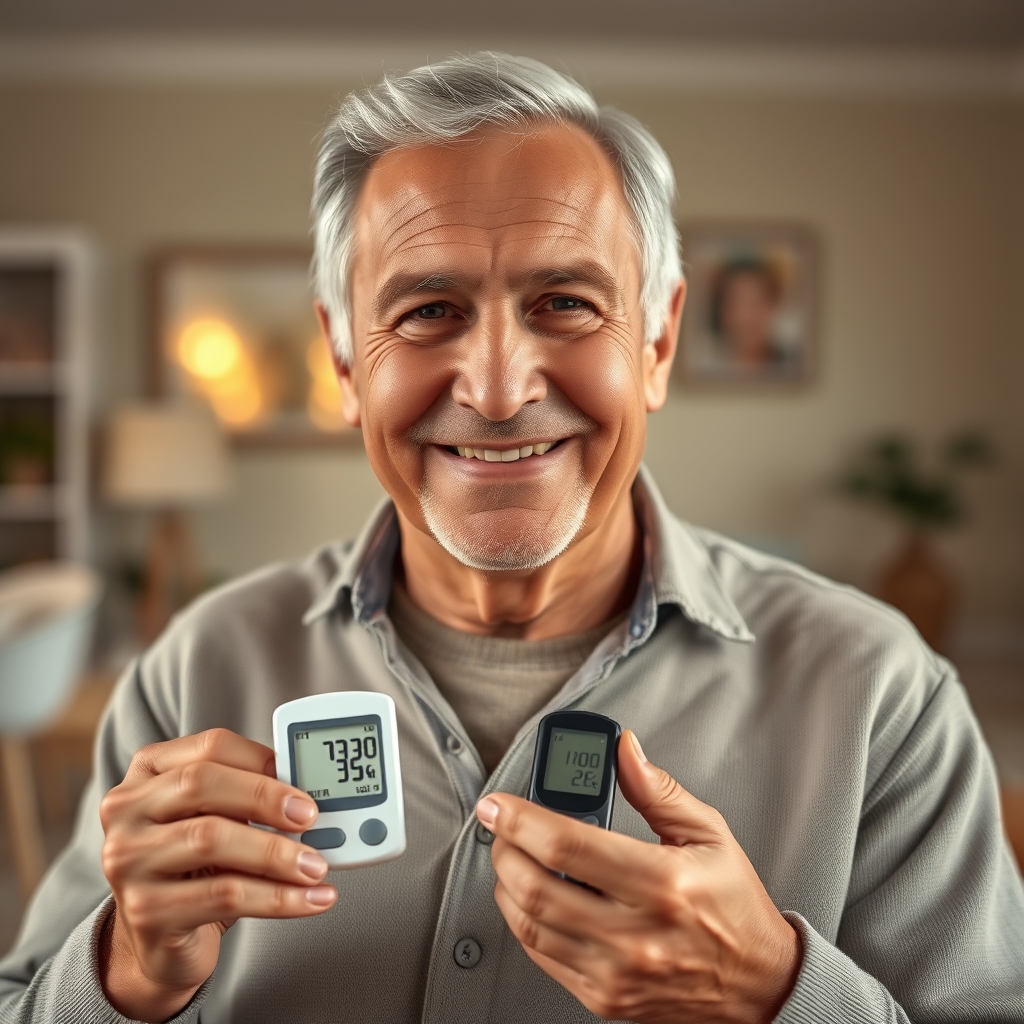
Every morning, the ritual is the same. Fasting glucose check. Medication was taken last night. Nothing eaten since dinner. And the number is still high — sometimes higher than it was before bed. The doctor says "try to sleep better," or "stick with the diet," but offers no mechanism. No explanation for why a night of not eating can still produce a morning spike that defies the treatment plan.
There is a mechanism. And for the majority of people with type 2 diabetes who experience it, it has nothing to do with food choices or medication compliance. It has to do with breathing.
What Happens to Your Blood Sugar While You Sleep
The body runs on a predictable hormonal schedule. Between approximately 4 and 8 a.m., as part of the natural wake-up sequence, cortisol and growth hormone surge — signaling the liver to release stored glucose in preparation for the demands of the waking day. In people without diabetes, this is handled efficiently: insulin clears the released glucose and blood sugar stays in range. In people with type 2 diabetes and insulin resistance, that surge isn't cleared. It arrives in the bloodstream as an elevation the patient never ate, never chose, and cannot prevent by diet alone.
Most endocrinologists address the "dawn phenomenon" by adjusting medication timing. The conversation usually ends there. But there is a second, more significant driver of nocturnal glucose elevation that rarely comes up in a standard diabetes appointment — and that affects the majority of people with type 2 diabetes.
Why 60% of Diabetics Have It — and Don't Know
Obstructive sleep apnea (OSA) is a condition in which soft tissue in the throat collapses repeatedly during sleep, partially or completely blocking the airway. Breathing pauses — called apneas — can last from a few seconds to over a minute and can occur dozens or hundreds of times per night. Most people with OSA have no idea it's happening. They don't feel themselves stop breathing. Their partner may mention the snoring, or they may not. They wake up tired, with a headache, with brain fog — symptoms that overlap completely with the fatigue already associated with diabetes, so the connection is never made.
A 2025 study found high prevalence of undiagnosed OSA specifically in older adults with suboptimally controlled type 2 diabetes and comorbid insomnia — the exact profile of patients told repeatedly to "try harder" with diet and exercise. The standard clinical workup for poorly controlled diabetes does not include sleep apnea screening.
The prevalence of OSA in people with type 2 diabetes has been estimated at 60–67% across multiple studies. Most of these patients remain undiagnosed — not because physicians are unaware of the connection, but because the standard sleep study (polysomnography) is expensive, requires an overnight clinic visit, and is rarely ordered unless a patient specifically complains of snoring or daytime sleepiness.
The Independent Insulin Resistance Loop
Here is why OSA matters for blood sugar specifically: every time breathing pauses, the body detects an oxygen emergency. The emergency response is cortisol — the same stress hormone that drives the dawn phenomenon. That cortisol signals the liver to release glucose. In a person with dozens of apneas per night, this happens repeatedly throughout the sleep period, not just in the early morning hours.
"Every time breathing stops at night, your body interprets it as an emergency. Emergencies require energy. Energy comes from glucose — and your liver starts releasing it whether you asked it to or not."
Beyond the cortisol mechanism, intermittent hypoxia — the repeated drops in blood oxygen that characterize OSA — directly impairs insulin signaling at the cellular level. Oxygen deprivation reduces the activity of the GLUT4 transporters that move glucose from the bloodstream into muscle cells. The result is a second, independent pathway for insulin resistance that operates entirely during sleep, is invisible on a glucose log, and cannot be addressed by the tools in standard diabetes management.
This is why researchers studying continuous glucose monitoring data found that patients with low skeletal muscle mass and OSA had significantly higher glycemic variability — not just in the morning, but throughout the entire day. The damage done during sleep hours doesn't stay in sleep hours.
What Standard Diabetes Treatment Was Never Designed to Fix
Metformin, GLP-1 agonists, SGLT2 inhibitors, dietary management, exercise protocols — every tool in the standard diabetes toolkit addresses choices made during waking hours. What you eat. When you eat. How much you move. None of these interventions reaches the nocturnal cortisol-glucose-hypoxia cycle. A patient could follow every recommendation perfectly and still wake up to an elevated fasting number every morning, because the mechanism driving that number is active while they sleep.
The research group investigating which natural compounds modulate the cortisol-insulin pathway at the cellular level — the same pathway dysregulated by chronic hypoxia — identified specific botanical extracts that act on insulin receptor sensitivity independently of sleep quality. The mechanism, the research behind it, and what 32,000 Americans found when they incorporated this approach is explained in the free video below.
The overnight glucose mechanism — explained plainly, with the research. Free, 4 minutes, no email required.
► Watch the 4-Minute Presentation — Free